 | Fosil Keong yang sudah membatu usianya ..... ngak tau saya, heheh kondisi cangkang keong masih terlihat utuh. Sangat cocok untuk koleksi Tinggi 14cm ; Lebar diameter bawah 8cm ; Diameter atas 2cm ; Berat 1Kg. Kalo yang berminat di bandrol Rp. 2jt nego |
Fosil Keong


Kalung Kujang Antik

Klik perbesar
| "KALUNG KUJANG" di reka ku urang Sunda - kalangkungan na ieu kalung hampang tur moal karaha'an....dipidamal ku cara ngaragajian, ngebor tur ngikiran na manual pisan....upami ceuk bule mah hand made. Bahan pisau : Alumunium Dural - ex bahan pesawat Bahan Gagang : Tulang Sapi Ukuran : 7.9Cm TERJUAL / SOLD |


Botol Vodka 2 1/2oz Satinless Steel
 | Botol Vodka ukuran 2 1/2oz terbuat dari bahan stainless steel Muir mackenzie & Co Ltd Scotland. Dulu sech buat vodka, tapi ma saya sekarang diisi buat minyak kayu putih ma minyak telon ... lebih bermanfaat sama-sama menghangatkan :D TERJUAL Lihat selanjutnya ...... |
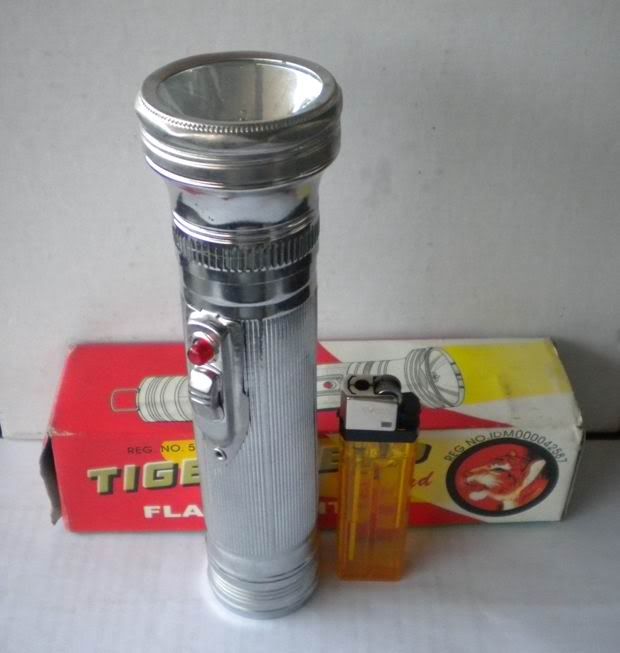
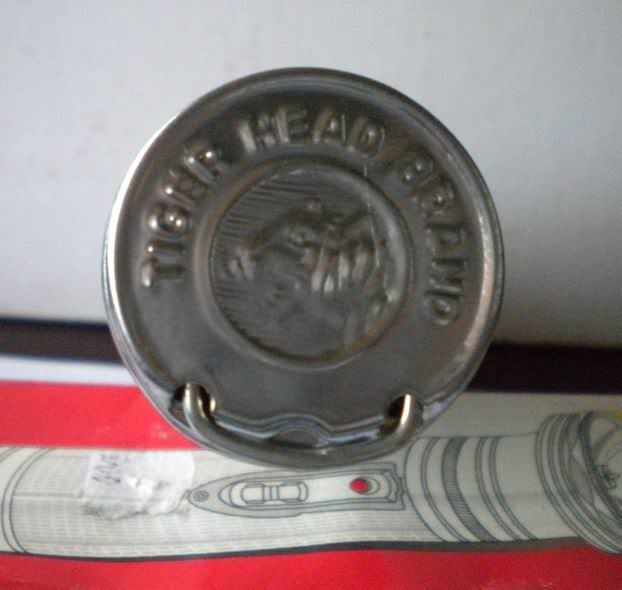
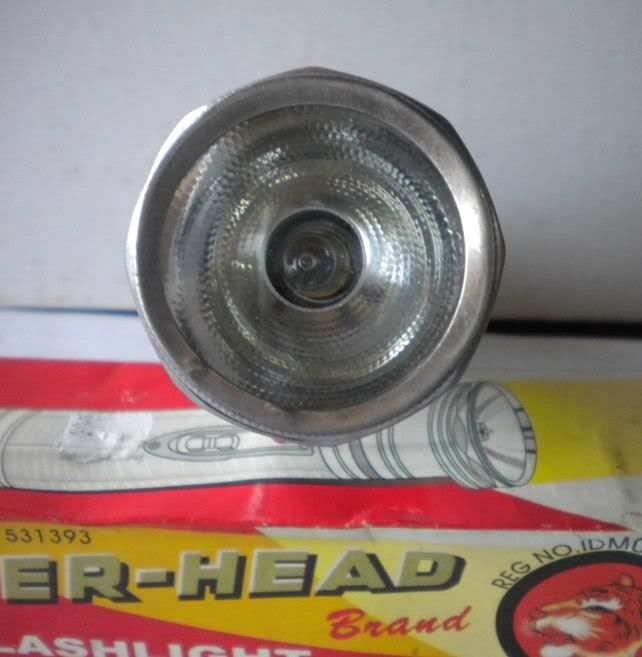
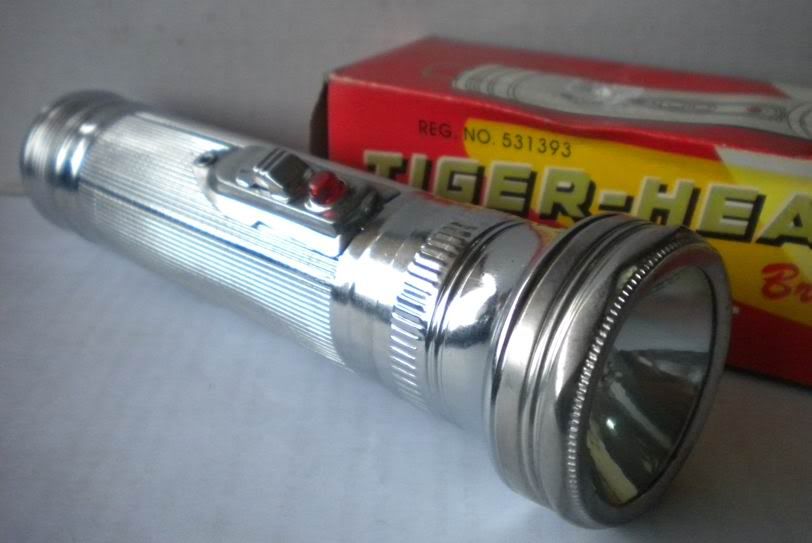
Lampu Senter Battre Jadul Tiger Head
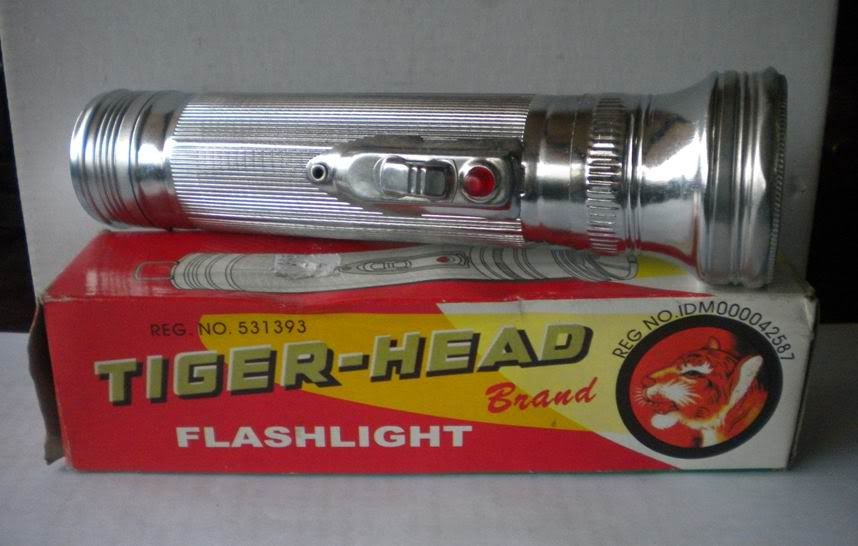 | Lampu Senter Tiger Head terbuat dari kaleng, isi 2 battre besar kondisi sangat bagus. SOLD OUT Lihat selanjutnya |
 |  |
 |  |
Kaleng Permen Fisherman
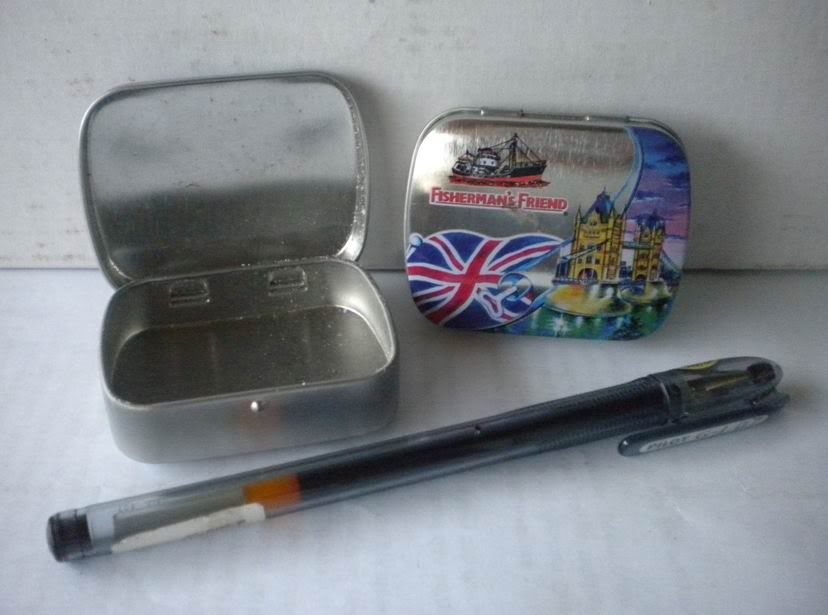 | Kaleng bekas permen Fisherman kondisi bagus. Saya cuma ada 4 buah, masing2 kaleng gambarnya beda. yang berminat bisa kirim email ke dharmaeka69@yahoo.com Buat nambah2 koleksi kaleng anda bagus banget. :D |
Koin Satu Abad Bung Hatta
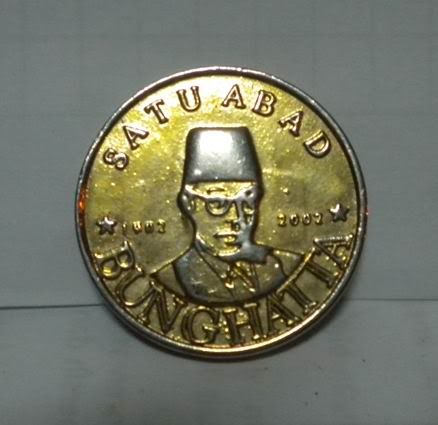 Tampak depan | 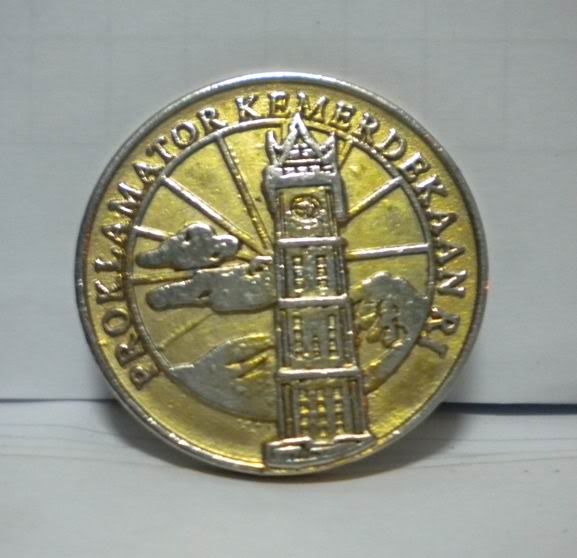 Tampak Belakang |
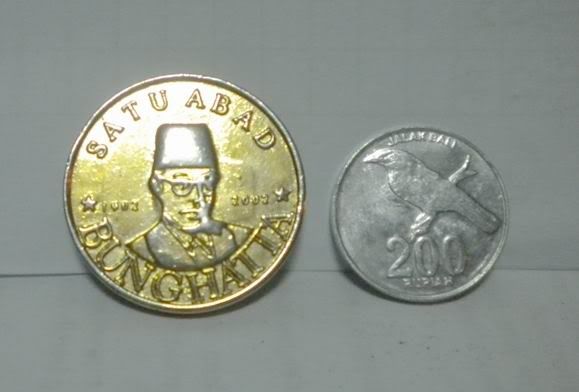 | Koin peringatan satu abad proklamator Bung Hatta. Kondisi seperti gambar. Bagus banget buat koleksi koin anda. Harga Rp. 200.000,- Tadinya ada perangkonya juga satu paket dgn koinnya ... tapi sayang perangkonya disantap ama rayap .... :( |
Korek api gesek jadul
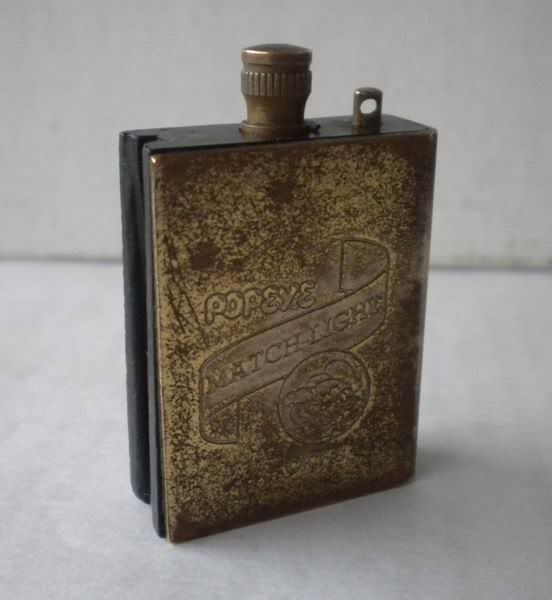 |  |
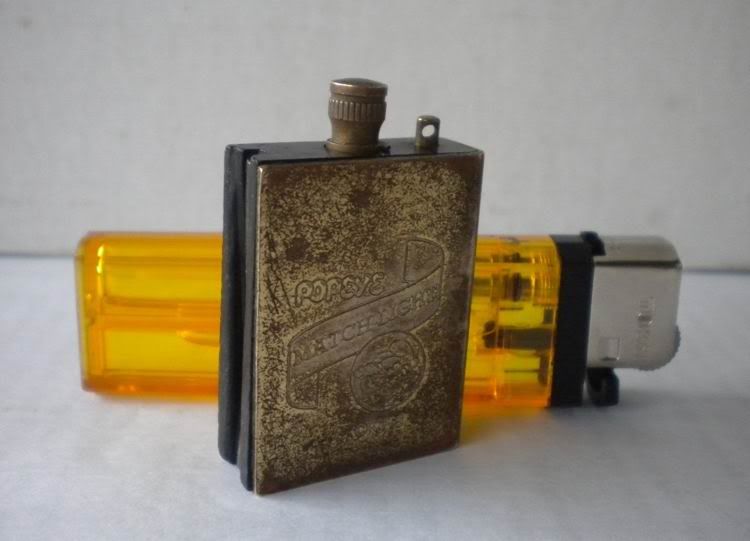 | Korek Api Gesek, digunakan dgn cara diputer dulu, terus di cabut selanjutnya digesekken ke pinggir korek yang ada batu koreknya... Bahan bakarnya biasanya menggunakan bensin ato spirtus. Terbuat dari kuningan. Dibandrol Rp. 100.000,- |
Iklan Jadul SEVEN - UP
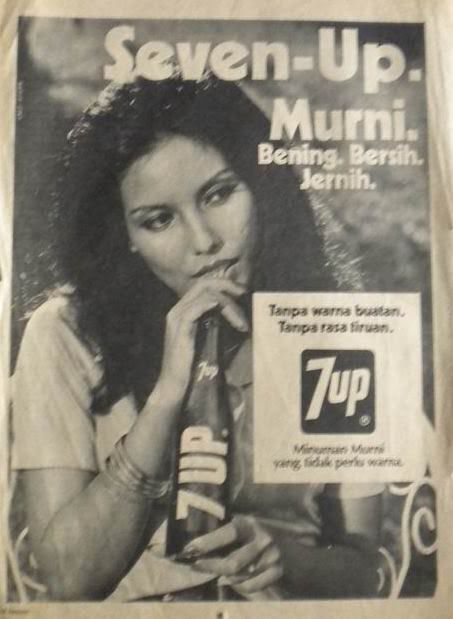 | Iklan jadul SEVEN UP ini didapat dari sobekan Majalah tahun 80an, buat yang suka kondisinya demikian seperti gambar.... buat pajangan dipigura .. terus dipajang keren banget jadul abis Bahan Kertas majalah, seperti gambar udah agak kuning yah. Harga Rp. 15.000,- |
Kaleng Coklat Charlington
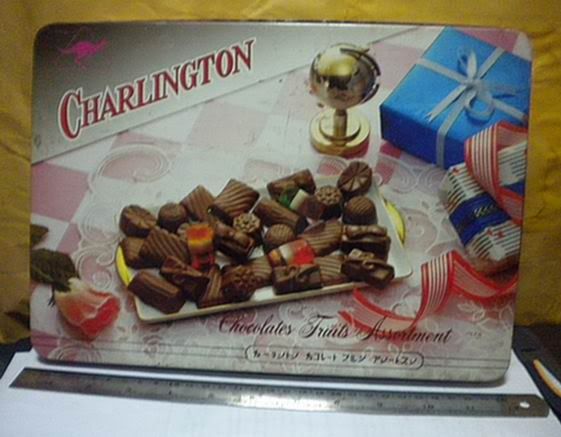 atau gift .. kondisi dalem sudah agak berkarat.. ukuran 30cm x 30 cm Dijual Rp. 40.000,- | 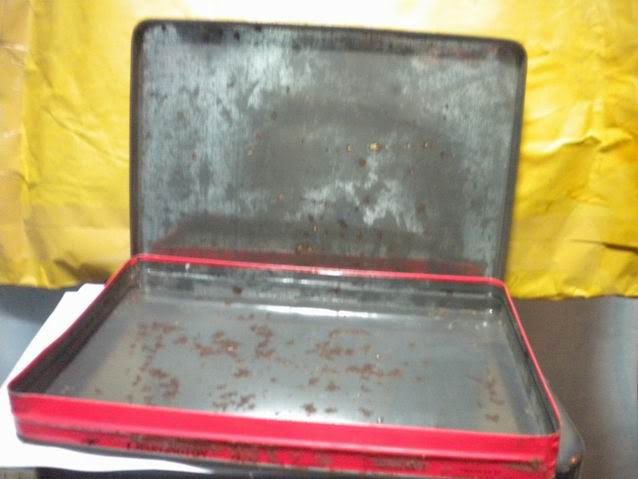 |
Watterpass Kayu Antik Buatan Germany
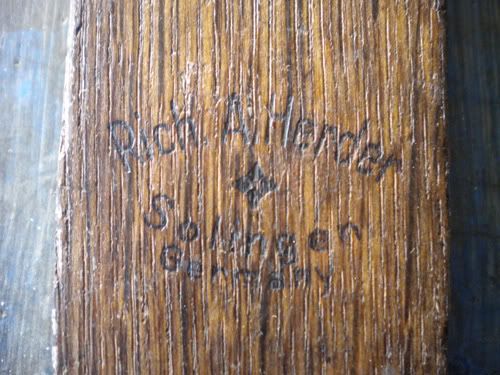 Buatan German Rich A Hender Solingen Germany TERJUAL - SOLD |  |
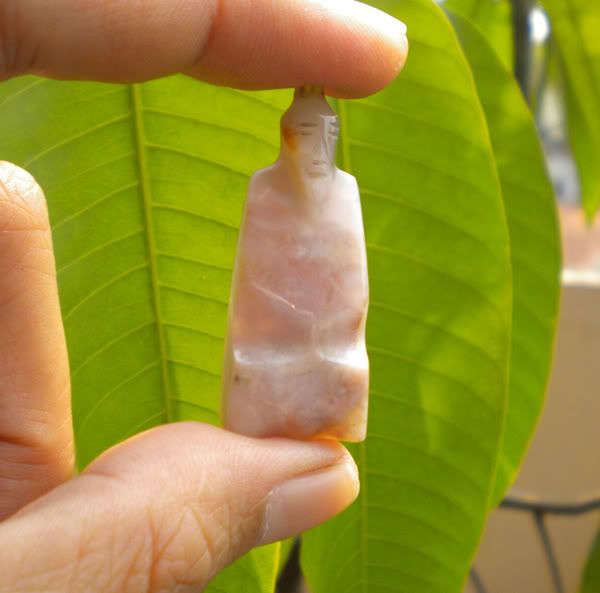
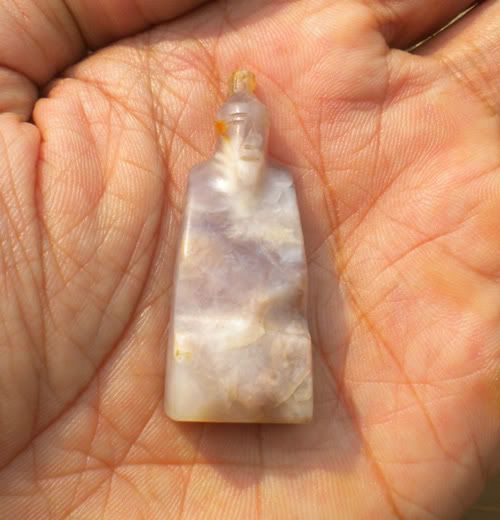
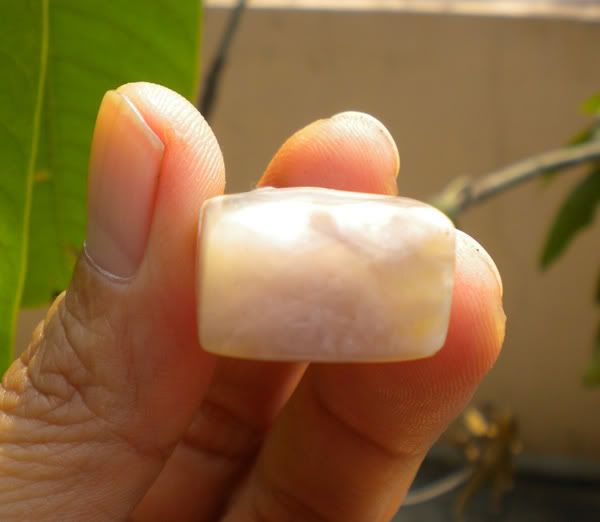
Batu Giok
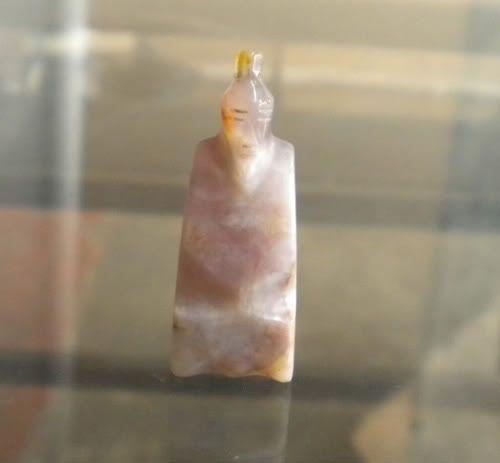
Giok ini punya Temen nitip lapak di tempat saya hehehe ... Siapa saja tentu tahu tentang batu Giok. Atau dengan sebutan lain batu Jade. Banyak yang beranggapan batu Giok tentu berasal dari daratan Cina atau Taiwan. Batu yang punya kesan "dingin" banyak dibuat perhiasan atau benda seni, seperti bentuk giok saya ini, berbentuk. Kata Giok akhirnya banyak dipakai dikalangan masyarakat Cina untuk nama wanita.
Bentuk seperti gambar ..... bisa dibuat liontin.
SOLD
Batu Antik Akik Combong Sulaiman
Baca/Lihat Selanjutnya


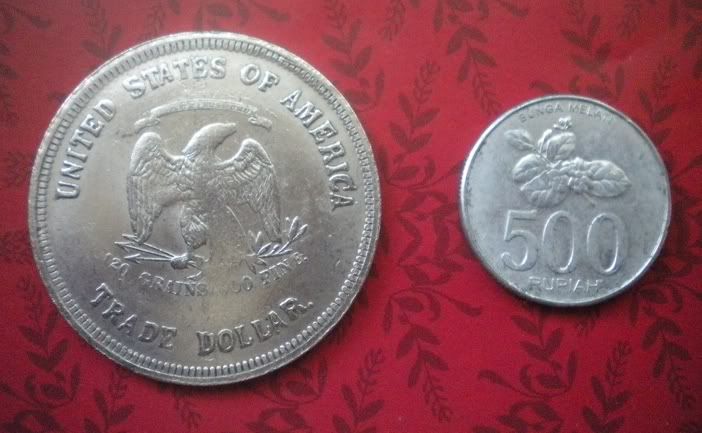
Koin Unites States Of America Tahun 1878
| Nice Silver Trade Dollar, "United States of America - Trade Dollar - 420 Grains 900 Fine - 1878 Tahun : 1878 Harga : Rp. 400.000,- |

 |
Trade dollar (United States coin)
The trade dollar was a United States dollar coin minted to compete with other large silver coins that were already popular in the Orient. The idea first came about in the 1860s, when the price of silver began to decline due to increased mining efforts in the western United States. A bill providing in part for the issuance of the trade dollar was eventually put before Congress, where it was approved and later signed into law as the Coinage Act of 1873. The act made trade dollars legal tender up to five dollars. A number of designs were considered for the trade dollar, and an obverse and reverse created by William Barber were selected.

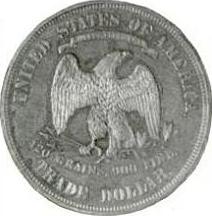
The coins were first struck in 1873, and most of the production was sent to China. Eventually, bullion producers began converting large amounts of silver into trade dollars, causing the coins to make their way into American commercial channels. This caused frustration among those who were given them in payment, as the coins were largely maligned and traded for less than one dollar each. In response to their wide distribution in American commerce, the coins were officially demonetized in 1876, but continued to circulate. Production of business strikes ended in 1878, though the mintage of proof coins continued until 1883. The trade dollar was remonetized when the Coinage Act of 1965 was signed into law.
Background

John Jay Knox popularized the idea of a dollar coin to compete with the Mexican dollar for use in the Orient.
In China, the Mexican peso (successor to the Spanish dollar) was greatly valued in commerce. However, the Chinese were sensitive to any changes in the coin's design, and were reluctant to accept newer coins due to a minor design change. The American silver dollar, 7.5 grains (0.49 g) lighter than its Spanish counterpart, was unpopular in the Orient due to its light weight, forcing American merchants to purchase the Spanish or Mexican pieces to use in trade.[3] Beginning in 1866, during the reign of Emperor Maximilian, the design was changed to show the Emperor's portrait; this caused widespread nonacceptance of the coins in China.[4]
While conducting an investigation of the Mint at San Francisco, deputy comptroller of the currency John Jay Knox began discussing the monetary situation with Louis A. Garnett, a man who had worked as both the treasurer and assayer of the San Francisco Mint.[5] Garnett recommended that the United States mint a commercial dollar that would be exported to the Orient to compete with other large silver coins that were already popular in that region.[5] Garnett's rationale was that the coins would be hoarded or melted in Asia and would never be presented for redemption, allowing the government to make a profit from the seigniorage.[6] During his time in San Francisco, Knox also discussed the proposed commercial dollar with Henry Linderman, who was working as a special agent for the Treasury Department at that time.[5] In 1870, Knox wrote a report to the Treasury and wrote the draft for a bill on coinage.[5] Knox's bill was approved by George Boutwell, Secretary of the Treasury.[5] After modification and review from current and former government officials, the bill was put before Congress.[7]

On February 1872, the bill was amended by a House of Representatives committee to include authorization for a commercial dollar weighing 420 grains (27 g);[7] this was struck three months later when the House voted to include provisions for the production of a standard silver dollar weighing 384 grains (24.9 g).[7] While in the Senate, a provision was added to the bill requiring the Treasury to coin a trade dollar of 420 grains (27 g), as had been done earlier in the House.[7] The revised bill, which came to be known as the Coinage Act of 1873, was approved in the House and Senate and was signed by President Ulysses S. Grant on February 12, 1873.[7] The bill provided, in part, for the striking of trade dollars which held legal tender status up to five dollars.[9] The legal tender provision was added by a last-minute rider at the behest of silver interests.[10] At the insistence of Ohio Senator John Sherman, the weight and fineness of the piece was indicated on the reverse, an attribution which numismatic historian Don Taxay found incomprehensible as "Chinese merchants would never understand them".[11]
Prior to the passage of the Coinage Act, the director of the Philadelphia Mint oversaw all branch mints.[12] After the Act, the office of director was transferred to Washington, D.C. and responsibility for each mint was handed over to a superintendent.[12]
Design selection
Throughout the year of 1872, the Mint struck a series of commercial dollar patterns in anticipation of the passage of the coinage bill.[13] Production of patterns continued into 1873, but the denomination of the pattern coins was changed from "commercial dollar" to "trade dollar" before the bill was signed into law.[13] After passage of the Coinage Act, Linderman met with Director of the Mint James Pollock to discuss the design of the newly authorized trade dollar.[13] The two men agreed to request a jewelry and engraving firm, Bailey Banks & Biddle of Philadelphia, to create designs that would be compared to those already created by Chief Engraver William Barber.[13]
After examining the designs of both parties, Linderman ordered that the design would depict a seated figure representing Liberty facing to the viewer's left, representing the direction of the Orient.[13] Linderman apparently selected the designs from two different patterns.[14] In June 1873, Linderman reviewed the various patterns created by Barber; he chose[15] an obverse which one contemporary reporter described as "a female figure seated on bales of merchandise, holding in her left hand a scroll bearing the word 'Liberty'. At her back is a sheaf of wheat, expressing, with the bales of goods, the commercial character of the coin: the right hand extended holds the olive branch."[16] The selected reverse depicts the bald eagle as required by law.[15] The eagle has three arrows in the right claw and an olive branch in the left, a reversal to most other U.S. silver coins of the era.[17] A set of six patterns, four with variations on the adopted obverse, and two showing portraits of Liberty, was sold by the Mint to the public in limited quantities.[18]
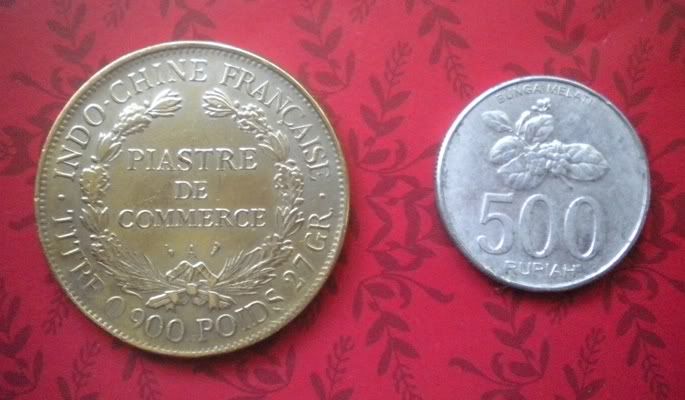
Coin republique francaise- indo chine tahun 1906
 | Koin mata uang kuno Perancis Tahun 1906 Harga Rp. 400.000,- |
 |

Description
Französisch Indochina 1907 A
Französisch Indochina Lec.290 1 Piastre 1907 A TB+/TTB 1907 A
Hier finden Sie Angebote im Bereich Pondichéry (sous le règne de Louis XV 1715-1774) immer wieder mal reinschauen. Ein Blick lohnt sich!
Angebote in der Kategorie Französisch Indochina, Pondichery, Regne, Kolonialmuenzen, Fanon, Piastre, Neueingänge.
Novel "James Bond 007 The Spy Who Loved Me" (1962 )
 |  |
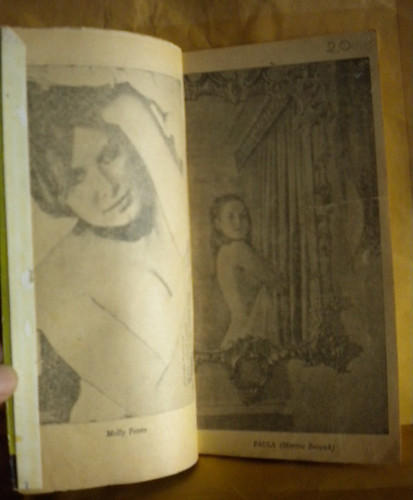 | Novel James Bond 007 ( Edisi Bahasa Indonesia) The Spy Who Loved Me Tjinta Seorang Mata-mata Jumlah Halaman 192 Penerbit Buku roket Tahun 1962 Kondisi Baik |
Special Edition "Nescafe Coffe" Mug dan stoples
 | Mug, cangkir, Gelas keramik Nescafe Coffe Spesial edition dan stoplesnya. kodisi bagus : 2 gelas dan 1 stoples. 1 set Harga Rp. SOLD - Terjual |
Group Musik "God Bless"
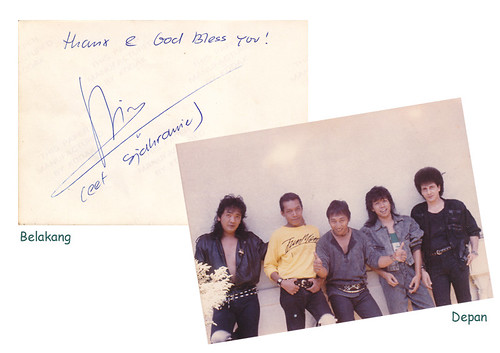 | God Bless adalah grup musik rock yang telah menjadi legenda di Indonesia. Dasawarsa 1970-an bisa dianggap sebagai tahun-tahun kejayaan mereka. Personil GodBless di era tahun 90an : Foto Asli dan tanda tangan asli EET SJAHRANIE (Gitarisnya pada waktu itu) Kondisi Foto bagus dan baik, tandatangan EET dibelakangnya. |
Di Era 90-an
Setelah melewati masa vakum yang cukup panjang, tahun 1997, para personel God Bless, termasuk Eet Sjahranie dan Ian Antono kembali berkumpul. 'Workshop' yang mereka gelar di kawasan Puncak, menghasilkan sebuah album berjudul Apa Kabar. Namun reuni ini tidak berlangsung lama karena Eet secara resmi mengundurkan diri dari formasi God Bless dan konsentrasi untuk bandnya sendiri, Edane yang sejak tahun 1992 sudah merilis album perdananya, The Beast.
Walau tidak banyak merilis album, God Bless, dianggap merupakan legenda grup musik rock Indonesia karena dianggap sebagai pelopor yang memiliki kualitas bermusik tinggi. Sepanjang perjalanannya, grup ini mengalami 15 kali lebih pergantian personil yang disebut sebagai 'formasi', dan saat ini tinggal Ahmad Albar (vokal), Ian Antono (gitar), dan Donny Fattah Gagola (bass) yang masih dapat dikatakan sebagai personil aktif grup.
Foto "Bon Jovi" dan "Debbie Gibson"
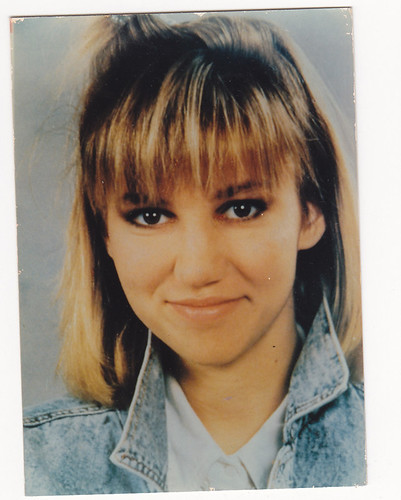 |  |
banget Harga Rp. 30.000,-/lembarnya, cuma ada 1 msing2


